
Argus AI Assistant
The conversational AI available on every page — its setup, how to question it, and what it will not do.
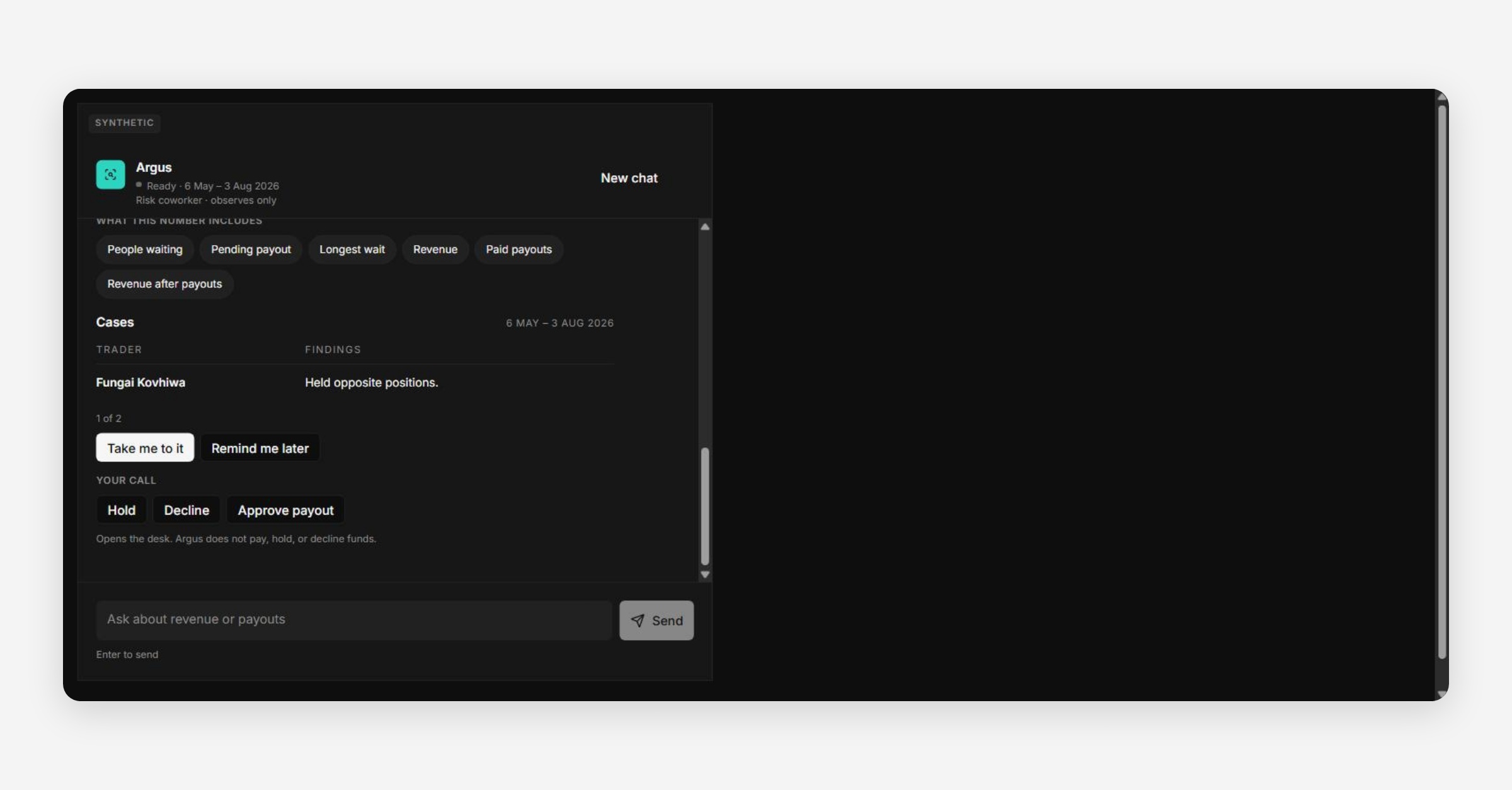
Argus (AI Assistant)
Argus is available from a floating button in the bottom-right corner of every page. It introduces itself plainly: "I am Argus, your risk coworker. I observe this firm's verified revenue, payouts, cases, and evidence. I do not approve or deny payouts, suspend accounts, or take another money-affecting action."
First-Time Setup
On first use, Argus asks two questions to scope what it should watch:
What matters most — sales and revenue, paid payouts, fraud and cases, or a mix?
How often should it check — hourly, every six hours, daily, or weekly?
Answering drafts a specialist watch that you approve before anything is saved; you can also skip setup entirely and start asking questions immediately.
Asking Argus a Question
Type a question in plain language (e.g. "what does this screen mean" or "how much revenue this month"). Argus shows its reasoning as a checklist before answering — for example, on the Payouts screen it reported: Checked Open payouts, Checked Open payout value, Checked Paid payouts, Checked Requested payouts — then gave the historical window, the requested-payout total, and a caveat that requested payouts "are not necessarily paid." This visible reasoning step is what makes Argus's numbers checkable rather than a black box — cross-reference the same figure against the underlying page (Desk, Firm, Payouts) before acting on it.
Argus also supports voice: a Call button next to the text input starts a spoken conversation in the same context.
What Argus Will Not Do
Argus's stated scope is read-only observation. It will not approve or deny a payout, suspend an account, or take any other money-affecting action — those decisions stay in Cases, made by a human operator. If a response from Argus ever appears to take or recommend an irreversible action directly, treat that as a bug to report rather than an instruction to follow.
Was this helpful?